


If your teeth are crowded, spaced or your bite does not quite meet, one of the first questions people ask is clear aligners vs braces – which one should I choose? Both approaches aim to guide teeth into the right position, but they work in different ways, look different and suit different situations. There is no single “better” option; the right choice depends on your mouth and your needs.
In this article we look at the main orthodontic options in plain language: how clear aligners and braces work, their advantages, their limits, and what to think about when deciding. The aim is not to promote one method but to give you a framework for asking the right questions about your own case.
Remember: which orthodontic option suits you only becomes clear after an examination and any necessary imaging. Two cases that look similar from the outside can need different treatment for different underlying reasons.
What are clear aligners and how do they work?
Clear aligners are thin, transparent trays that fit over your teeth, usually replaced with a new set every few weeks. Each aligner nudges the teeth slightly towards the next stage, so treatment moves forward in small, controlled steps. They are made to fit your teeth individually, and being removable is their most obvious feature.
Key advantages
- Because they are largely transparent, they tend to attract less attention in everyday life.
- They can be taken out to eat and to brush your teeth, which usually makes it easier to keep up oral hygiene.
- With no metal wires or brackets, some people find there is less soft-tissue irritation.
Things to keep in mind
The success of clear aligner treatment depends heavily on consistent wear. Aligners are generally expected to be worn around 20–22 hours a day; if that falls short, movement can slow down or may not go to plan. Aligners may also not be enough on their own for complex bite problems, impacted teeth or significant skeletal discrepancies. In those situations your dentist may suggest a different approach.
What is fixed braces treatment?
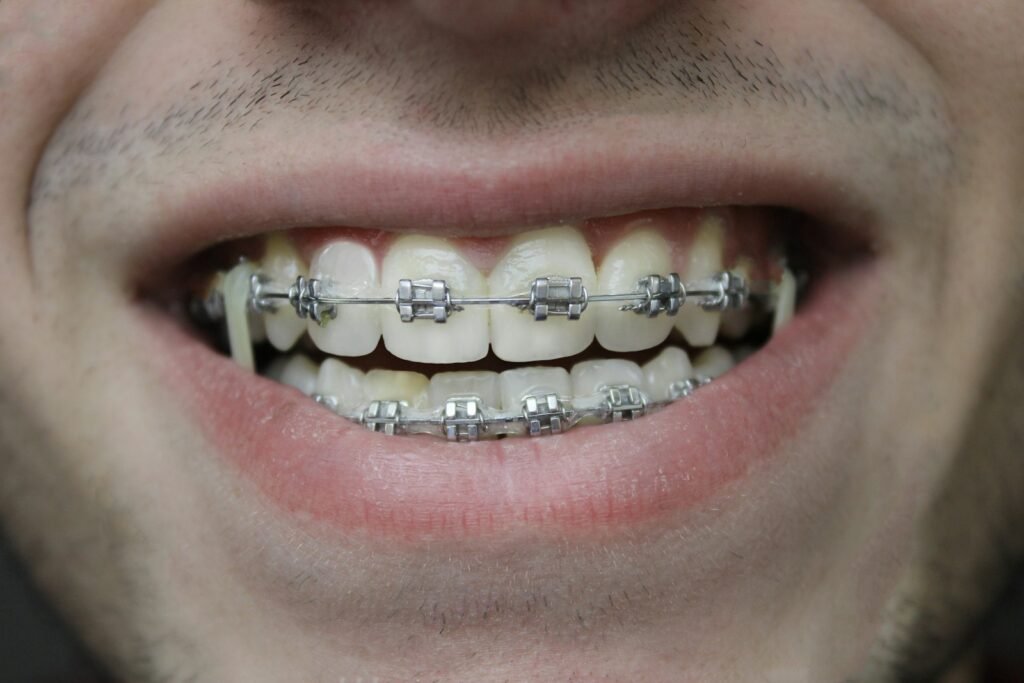
With fixed braces, small attachments called brackets are bonded to the teeth and connected with a wire. The wire is adjusted by your dentist at set intervals and applies a continuous, controlled force to the teeth. This is one of the most established and most studied options in orthodontics.
Key advantages
- Because they are fixed, they do not rely on your discipline; the wire and brackets stay in place.
- They have a broad range of use in complex crowding, rotated teeth and some bite problems.
- Progress is guided by your dentist, so the treatment process can be more predictable.
Things to keep in mind
Brackets and wires can make it easier for food to collect between and around the teeth, so extra care with oral hygiene is needed. Avoiding hard and sticky foods helps prevent damage to the brackets. You may also notice mild pressure and sensitivity in the first few days; this usually eases within a few days.

Clear aligners vs braces: when does each one come out ahead?
Choosing between the two is usually less of a contest and more an assessment of suitability. The list below may help you understand the general trends, but the final decision is made after an examination.
- Mild to moderate crowding: clear aligners can often be a good option, provided you wear them for long enough each day.
- Complex bites and severe crowding: braces or combined approaches may be more suitable.
- If appearance is a big concern: clear aligners are less noticeable in daily life; in some cases aesthetic brackets may also be considered.
- If sticking to a wear routine is difficult: fixed braces can have an advantage because they do not need to be put in regularly.
Some patients are planned with both methods together, or with different appliances at different stages. These decisions are made alongside your gum health, the condition of your enamel and your jaw structure. Oral hygiene and gum health are an inseparable part of orthodontic treatment; where needed, planning can be done together with gum treatment.
Orthodontic options for children and teenagers
The right time for an orthodontic assessment often coincides with a particular stage of a child’s dental development. An early examination can help pick up some problems before they progress. In children, the treatment plan is made with growth in mind, so the appliance or method used may vary with age and need.
In teenagers, appearance can become a bigger concern and requests for clear aligners are common. But because aligners need to be worn consistently, the level of responsibility and daily routine are also part of the assessment. To keep track of your child’s dental development and get preventive advice, it helps to keep up regular children’s dentistry check-ups.
How long does treatment take and how does the process work?
The length of orthodontic treatment varies considerably from person to person; the degree of crowding, the bite relationship, age and wear habits all affect it. So giving a definite answer to “how many months will it take” would not be accurate. After an examination your dentist can give you a roadmap, but this plan may be updated as your check-ups progress.
The process usually includes these steps:
- An examination and any necessary imaging to assess your current situation.
- Discussing your goals and choosing the appropriate method.
- Active treatment: guiding the teeth with aligner changes or wire adjustments.
- Retention: using an appliance or wire to protect the result you have achieved.
The retention stage is often overlooked, yet it plays an important role in keeping results stable. Following the retention routine your dentist recommends helps reduce the tendency for teeth to drift back towards their old position.
Questions to ask when deciding
Asking the following during your examination can help you understand which option suits you:
- In my case, which method gives a more predictable result?
- If I use clear aligners, how long do I need to wear them each day?
- Might I need any extra treatment for my gums or enamel during treatment?
- How will check-ups and the retention period be planned?
- If I want aesthetic adjustments after orthodontics, what options could we discuss?
Orthodontics does not only straighten teeth; in some cases it is planned together with smile aesthetics. For example, if you have expectations about the shape and colour of your teeth, the steps that would be appropriate as part of smile design can be assessed separately. It matters that these plans are handled in the right order alongside your orthodontic treatment.
Frequently asked questions
Are clear aligners as effective as braces?
In suitable cases and when worn consistently, clear aligners can give effective results. However, with complex bite problems, braces or combined approaches may be more appropriate. Which suits you becomes clear after an examination.
Will wearing clear aligners affect my speech?
There may be a short adjustment period in the first few days, and some sounds may feel temporarily different. Most people adapt quickly. If you have noticeable difficulty with speech, it is worth talking to your dentist.
Is braces treatment painful?
After wire adjustments you may feel mild pressure and sensitivity for a few days; this usually eases. If a bracket or wire is catching or digging in, you should contact your dentist.
Will my teeth move back after orthodontics?
If the retention period is not followed consistently, teeth can show some tendency to shift back. That is why using the retainers your dentist recommends as advised helps protect your result.
The bottom line: the right choice starts with the right assessment
Clear aligners and braces are both valuable orthodontic options that meet different needs. When deciding, it is worth weighing not only appearance but also your dental and gum health, your bite and your daily habits. That assessment can only be done properly with an examination in the mouth.
At our practice in Avcılar, you can book an examination to talk through the orthodontic options that suit you and to have your questions answered. For details and to get in touch, contact us and we can work out the best roadmap for you together.
This article is for general information only and is not a diagnosis or personal treatment advice. If you have symptoms, we recommend booking an examination.
Images: Photo by Diana Polekhina on Unsplash