


Seeing blood in your saliva while brushing is something most people get used to. “I must have brushed too hard,” we tell ourselves, and carry on. Yet healthy gums do not bleed when brushed — just as healthy skin does not bleed when touched.
Bleeding is the first and often the only sign that the gum is inflamed. The good news: if it is noticed at this stage, the situation can largely be reversed.
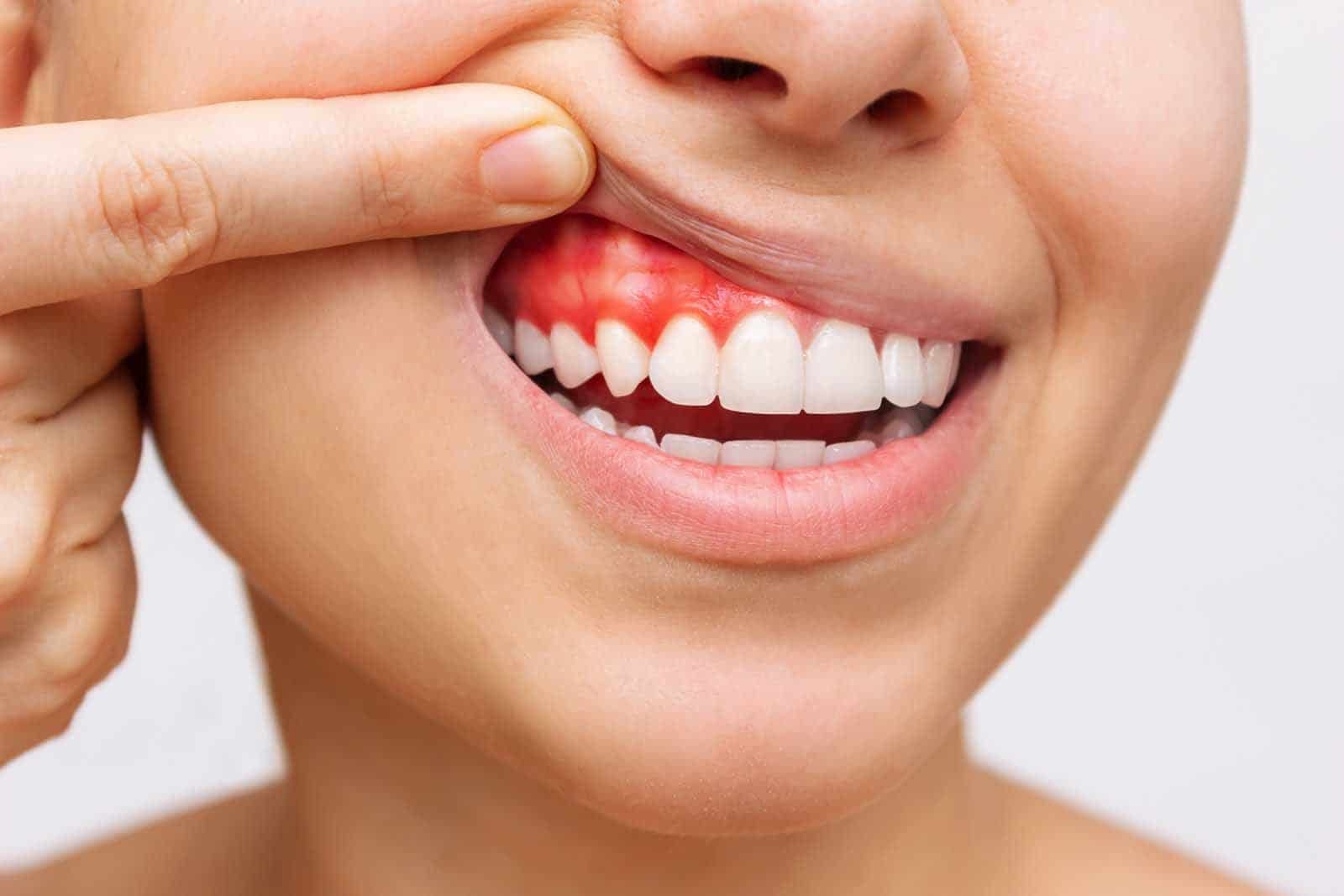
The most common cause of bleeding: gum inflammation
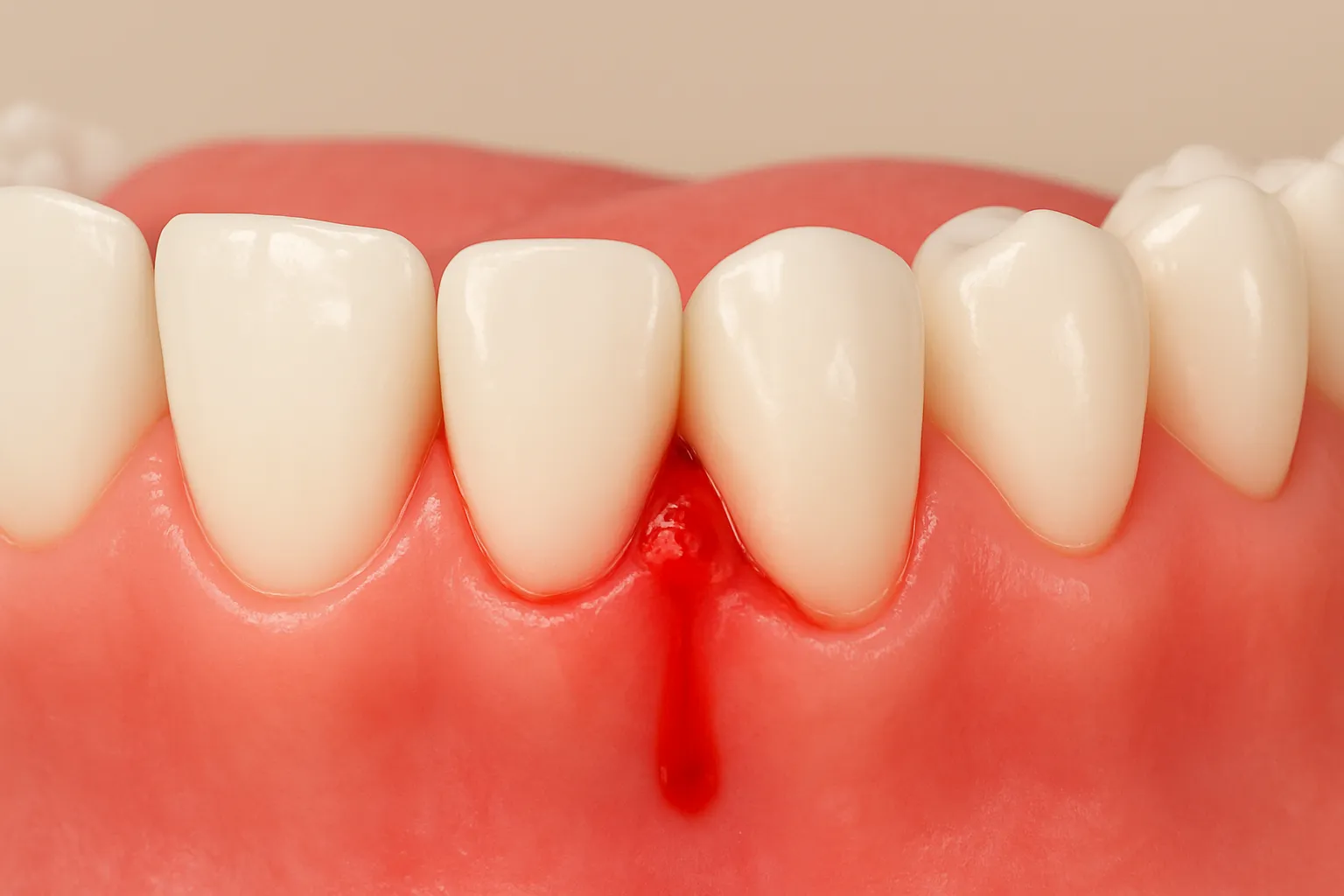
Bacterial plaque forms continuously in the mouth. Plaque that is not removed by brushing builds up along the line where tooth meets gum and hardens into tartar. Tartar cannot be cleaned off with a brush, and its rough surface makes it easier for new bacteria to accumulate.
The body responds to this build-up with inflammation. An inflamed gum reddens, swells slightly and its capillaries become fragile. That is why it bleeds at the slightest contact.
This stage is called gingivitis — inflammation confined to the gum. The bone is not yet affected, and after cleaning and proper care the gum can return to health.
What happens if it is neglected?
The inflammation does not stay confined to the gum. In time it advances to the bone surrounding the tooth and turns into what we call periodontitis.
The difference matters: lost bone does not come back. Treatment can stop the progression but cannot restore bone that has dissolved. As the process advances, the gums recede and the teeth first become sensitive, then start to loosen.
In adults, a significant share of tooth loss comes not from decay but from this process. What is more, it advances almost entirely without pain — which is why patients usually notice it late.
Other factors that increase bleeding
Bacterial plaque is the main cause, but certain conditions make things worse:
Incorrect brushing. A hard brush and a horizontal scrubbing motion damage the gum. Not brushing an area for fear of bleeding, on the other hand, lets plaque build up and makes the problem bigger.
Smoking. Nicotine constricts the blood vessels, which suppresses bleeding. In a smoker, gum disease can advance without any visible bleeding; the disease worsens silently.
Hormonal changes. During pregnancy, adolescence and menstruation the gums become more susceptible to inflammation. Bleeding during pregnancy is common, and care needs to be even more thorough in this period.
Diabetes. When blood sugar is not under control, gum disease both advances faster and responds more slowly to treatment. The relationship works both ways: gum inflammation also makes blood sugar harder to control.
Certain medications. Blood thinners make bleeding more obvious; some blood pressure and epilepsy medications can cause gum overgrowth. That is why it matters that you tell your dentist what you are taking.
Vitamin C deficiency. Rare nowadays, but it can contribute to bleeding gums where the diet is unbalanced.
What can you do at home?
These do not replace treatment; if the cause of the inflammation is tartar, nothing you do at home will remove it. They do, however, slow the progression by reducing plaque build-up.
Keep brushing the area that bleeds. The most common mistake is leaving an area alone because it bleeds. As plaque builds up, so does the inflammation. Brush gently but regularly with a soft brush.
Use a soft brush, with the right motion. Place the brush at a 45-degree angle to the gum and clean with small circular movements. Scrubbing horizontally makes the gum recede.
Don’t skip interdental cleaning. A brush reaches about two-thirds of the tooth surfaces. The rest — the surfaces where teeth face each other — need floss or an interdental brush. Gum disease very often starts in exactly these places.
Consider giving up smoking. The effect on gum health shows quickly.
Most mouthwashes suppress the symptom temporarily without removing the cause. Consult your dentist about long-term use.